





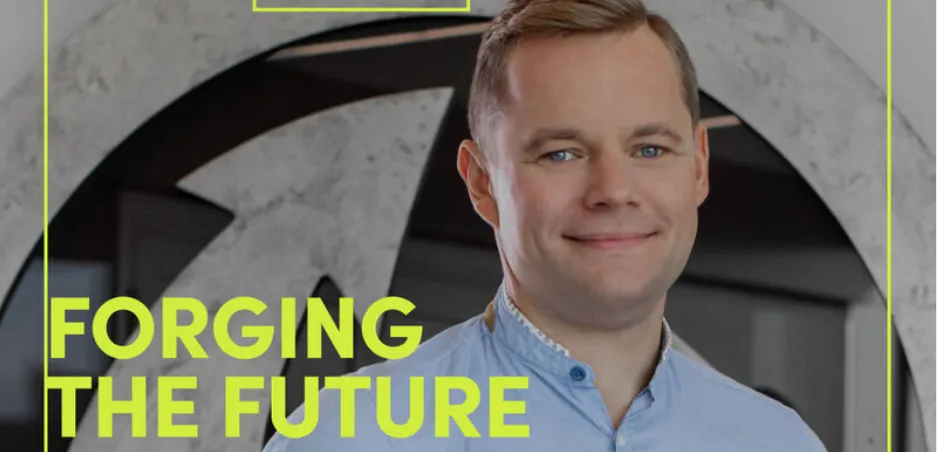
Our gaming industry interview series is back with Sergei Vasiuk and we’re starting strong!
You all know our first guest of the new season: Sergei Vasiuk, the king of LinkedIn with his insightful posts.
We talked about live service games, data-driven design, gaming sector and how the gamer experience keeps evolving.
💬 Talha Turhal – 0. Could you briefly introduce yourself, especially for developers and players in Türkiye?
🧠 I’m Sergei Vasiuk, Product Director at Wargaming.net Platform and author of Running a Successful Live Service Game. I started as an engineer, moved through data and platform roles, and found my passion in LiveOps — the point where tech, creativity, and player psychology meet. I think developers in Türkiye will relate to that mix of craft and curiosity, building something global yet deeply human.
🎯 1. What is the main focus of the Wargaming.net Platform today?
🎮 The Wargaming.net Platform today is about uniting all our titles under one ecosystem: shared accounts, cross-progression, achievements, personalization, and LiveOps that work seamlessly across games. Our LiveOps priority is simple: create systems that respect players’ time and sustain engagement without burnout.
⚙️ 2. What defines a truly “live” game in your view?
🌍 A game becomes a living service when it reacts — to data, to people, to culture. Technically, that means strong pipelines, analytics, and tooling that allow real-time iteration. Culturally, it means curiosity, humility, and teams that listen to players as partners, not just consumers.
💰 3. How do you balance loyalty and monetization in live service games?
📊 We look at loyalty and monetization as the same equation and not opposites. If players feel valued, they’ll spend naturally. We focus on long-term LTV, not short-term ARPU spikes, and always test whether a feature adds joy before it adds revenue.
🤝 4. How important is community feedback in your LiveOps philosophy?
💬 Community is everything. Our main rule: listen first, respond fast, and stay transparent even when it’s hard. The best communities grow around respect — between players, community contributors, and developers. We try to nurture that trust daily.
📖 5. Your book Running a Successful Live Service Game was well received. What inspired it?
📘 The book came from mentoring younger teams and seeing how often LiveOps was misunderstood as “just more content.” What still holds true: LiveOps is about life outside of game updates — the relationships, rhythms, and reactions that keep a game alive between patches.
🏗 6. What are the biggest challenges of scaling LiveOps globally?
🌐 Scale brings two big challenges: reliability and focus. Technically, keeping millions of players connected 24/7 requires invisible stability. Organizationally, it’s about alignment — dozens of teams, one heartbeat. That’s where clear product vision matters most.
🧩 7. How do you balance data-driven decisions with creative instincts?
🎨 Data tells you what players did. Creativity guesses what they might do next. We start with data, but leave room for instinct — especially from designers close to the community. The best ideas often begin as creative hunches and end up validated by numbers.
🚀 8. What’s the next big evolution in LiveOps and gaming platforms?
🕹 The next phase is game-as-a-platform: UGC, cross-game economies, creator ecosystems. AI will accelerate production, but creativity and curation will define value. We’re moving from games that entertain to platforms that empower.
💡 9. You transitioned from engineering to product leadership. What was the key lesson?
💬 Shifting from engineering to product meant learning to speak “human” as well as “code.” Empathy and storytelling became as important as logic. My advice: stay technical, but practice explaining complex ideas simply — that’s what leadership really is.
🎁 10. Lastly, do you have a message for developers and players in Türkiye?
🇹🇷 To developers and players in Türkiye — keep that creative spark alive. Your region has an incredible mix of talent, passion, and originality. The world doesn’t need more games — it needs your voice in them.
We’d like to thank Sergei for his time and the valuable insights he shared with us.
We hope our readers enjoyed this interview as much as we did.
Our series of interviews with leading figures from the gaming world will continue, stay tuned!
You can read gaming news here.